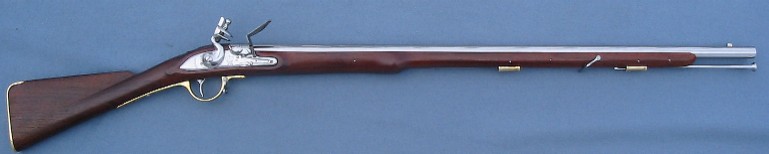
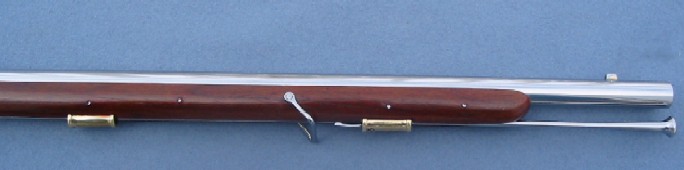
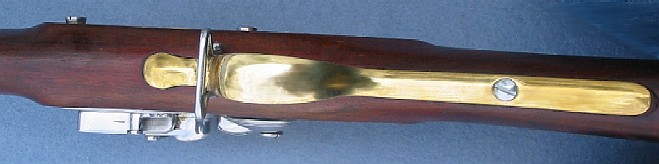
A reproduction of the Royal Navy’s 1778 sea-service pattern, with a straight lock and steel ramrod.
Supplied in a non-firing state.
Full view · 1 / 7Select a photograph to inspect
Technical details Specifications & construction
Pattern1778
RamrodSteel
Reproduced here is
the 1778 model of the Sea Service musket.
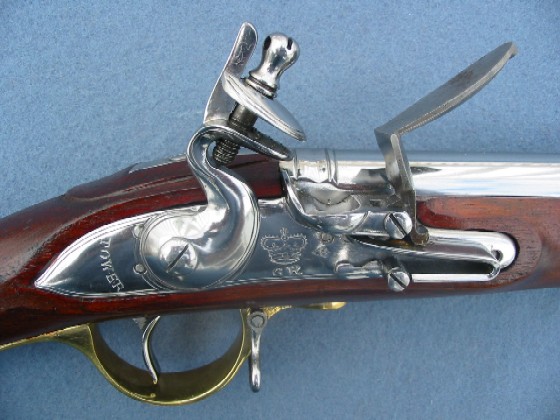
It adopted the 1777 style
straight lock
at this time.
In addition a steel ramrod became standard and a small
spring catch as added to the first pipe to keep the rammer from falling
out.
As you can see no brass nose cap was used on this nor any other
model of sea service musket.
After the study of a
number of originals, (see an
original in
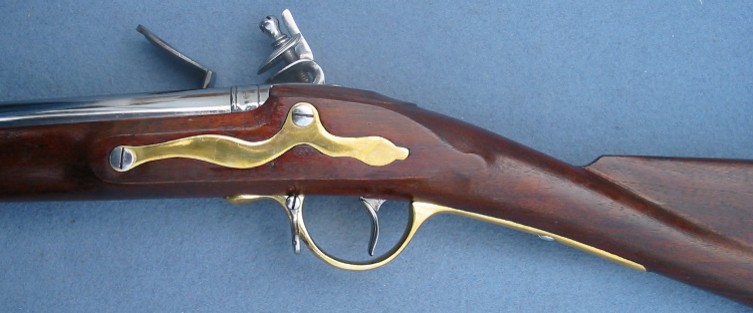
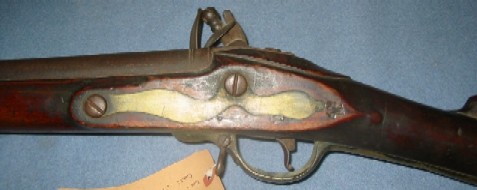
Canadian War Museum collection) the presence of a trigger plate seems to be more common
then not (see
original trigger plate
with
remnants of blacking on it).
The tang screw ends in a small square
nut in front of the
trigger.
This element was adopted into the 3rd model brown bess.
The trigger guard is short and quite simple in design and the musket itself
was one of manufacturing efficiency than elegance.
The lock is made with strong durable springs and
has a case-hardened frizzen (hammer) that throws good sparks (our new process
of industrial hardening has made this even more durable).
The
ramrod has a tight end and when in the barrel has 1 inch of length past the
muzzle for easy handling.
We use a industrial case-hardening factory
process that makes sparking both more reliable and longer lasting.
Presently no other musket provider uses this technique.
As with all our
other flintlocks, the vent is not drilled (read details below) so we can ship easily to your door
throughout North America and to Europe and the UK.
Aside from that they
are exactly like
the originals.
A fine addition to any collection.
The story behind the pattern
History
American
Revolution - Nelson's
Navy - War of 1812
As early as 1738,
Britain's Admiralty had muskets made specifically for its sailors and
Marines.
Throughout the next 100 years the sea service
musket went
through a slow evolution in lock styles, but three elements remained the
same:
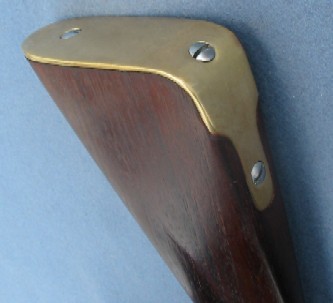
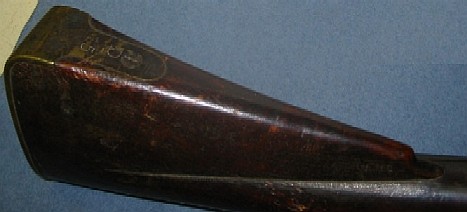
(1) a short barrel, (2) a two
ramrod pipes, and (3)
a
distinctly flat butt plate with a square-cornered butt.
This butt shape
was completely unique to the sea service musket (see
original
butt plate).
From 1757,
this musket was produced in both a bright finish (shown here) and a blackened
or japanned finish.
It is likely the bright finish was the
distinguishing element of the
arms of the Marines (after 1802 "Royal Marines") from that issued to the
sailors.
Bright arms were a source of pride for Infantry Regiments and
considering the infantry-like duties of the Marines, it is likely they
possessed the time to maintain the bright finish both at sea and while on
service ashore.
Not so for the
seamen whose time was better spent in seafaring than polishing.
Blackening the
barrels of their muskets to protect them from salty sea water was the better
option.
On some original this
blackening was even extended to the brass as well.
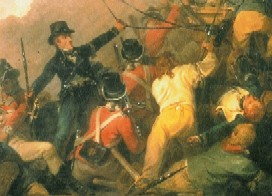
Boarding party of sailors and
marines, 1801
By the time of Nelson, a portion of the crew
(example: 150 sailors on a 1st Rate ship) was expected to be well-versed in
the musket firing exercise and took turns on board to become efficient in the
proper handling of their musket.
The Captain only needed to dispatch
this portion of the crew to repel enemy boarders.
A small
well-trained, volley-firing detachment was much more effective than a large
mob of sailors firing indiscriminately.
In addition, when part of a
ship's crew was called upon to fight on shore, they could perform their duty
like trained Infantry.
That said all of the
crew received basic training in the use of a musket.
The ship's Master at Arms
was specifically ordered when training the crew "to direct their
attention to the pointing of their muskets well before they fire
them".
(see
Regulations
and Instructions Relating to His Majesty's Service at Sea
(1808) for further information)
.
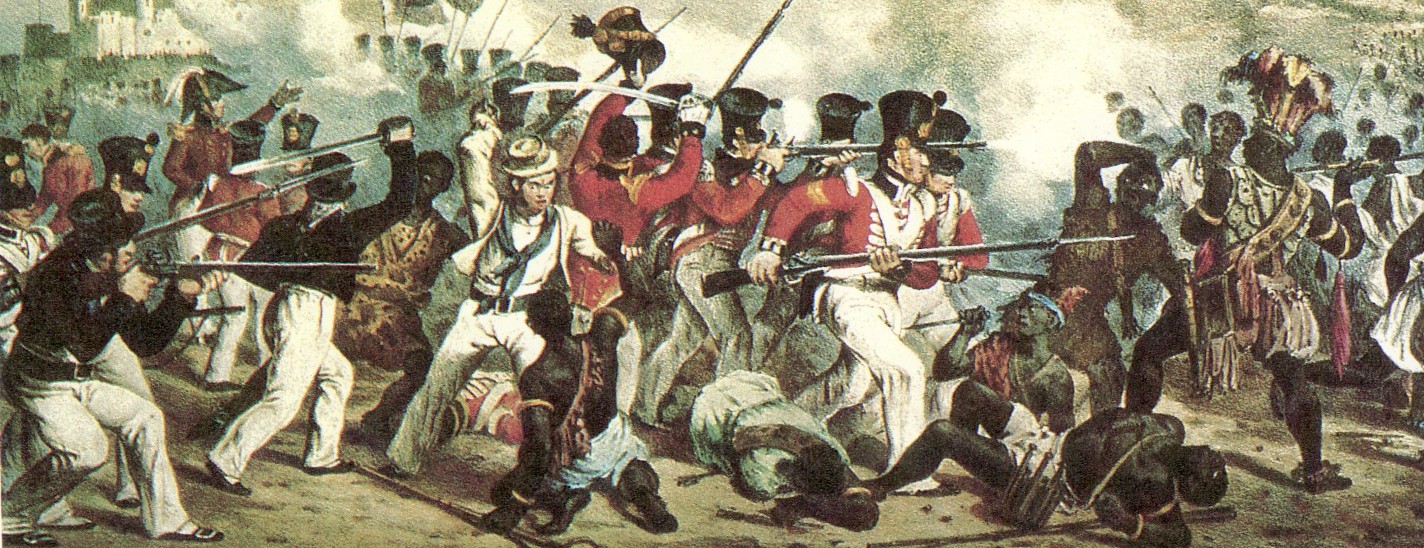
Royal Navy Seaman to the left
using this Sea Service musket in the Defeat of the Ashantis, 1824 by Dennis
Dighton
The 37 inch .75 calibre barrel is made of
tempered seamless modern carbon steel (type:BS970
no.080M40) with a
tight breech plug.
Blackened barrels were rough filed to improve
bonding of the blackening.
The one offered here is the bright steel
model but can be easily blackened by the customer.
Click on
Image Links:
Our Guarantee
If upon receiving your musket you are not completely happy with
your purchase, you may return it for a refund. All we ask is you cover the
shipping costs. It has to be returned in two weeks of receipt and be in its
original state (unaltered and unmodified).
Non-Firing State
We sell historically accurate muskets and pistols in a non-firing state for demonstration purposes. This allows us to comply with various local, state, national and international firearms regulations, along with shipping company policy restrictions. This means the product comes right to your doorstep. A certified gunsmith may decide to alter a musket or pistol to a firing state by drilling the vent hole and test firing it. No need to remove the breech plug. We are not legally responsible for any changes from its present state. Please read our Conditions of Use and Legal Disclaimer. The customer is expected to be aware of the laws of their locality that govern products of this nature.