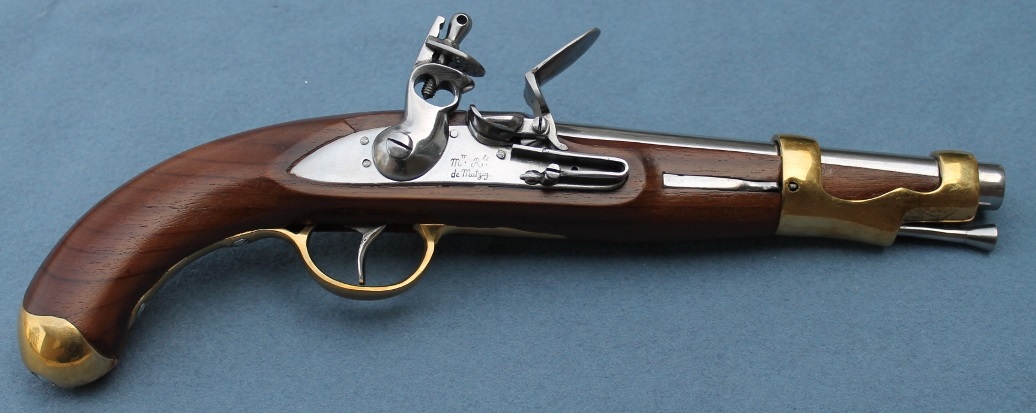
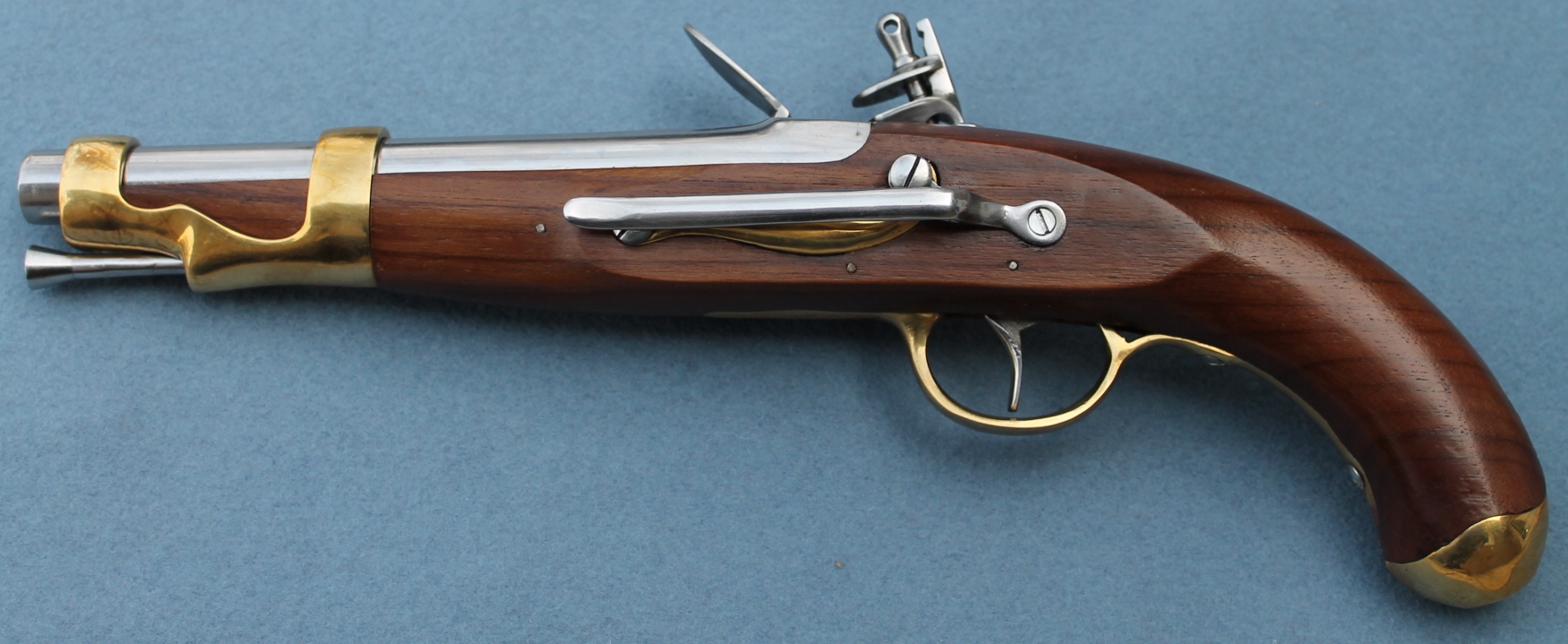
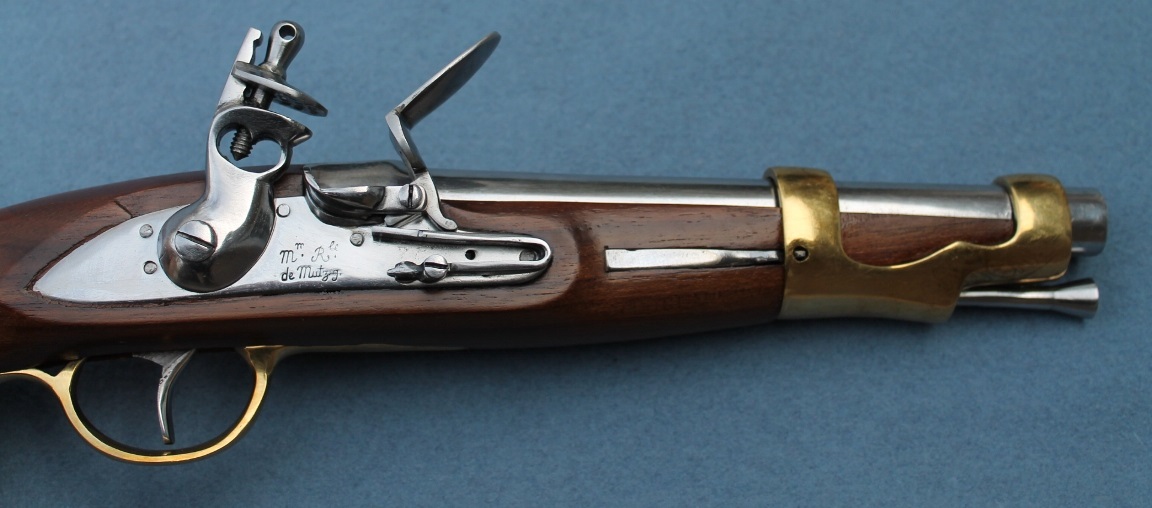
A reproduction of the French 1766 cavalry pattern with a 9-inch octagon-to-round barrel.
Supplied in a non-firing state.
Full view · 1 / 5Select a photograph to inspect
Technical details Specifications & construction
Barrel9 inches
Bore.71 calibre
This
reproduction 9 inch octagonal-to-round barrel has a surprising .71 calibre barrel
which must have given the rider quite a jolt when it was fired.
The highly-polished steel used in the barrel is made of tempered seamless modern
steel (type:BS970 no.080M40)
with a tight
breech plug.
This pieces historical significance in the American Revolution should make
it popular with collectors.
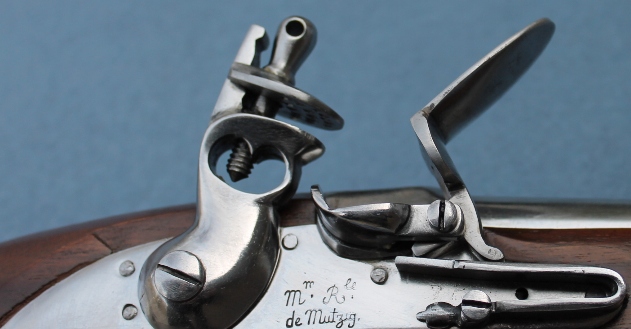
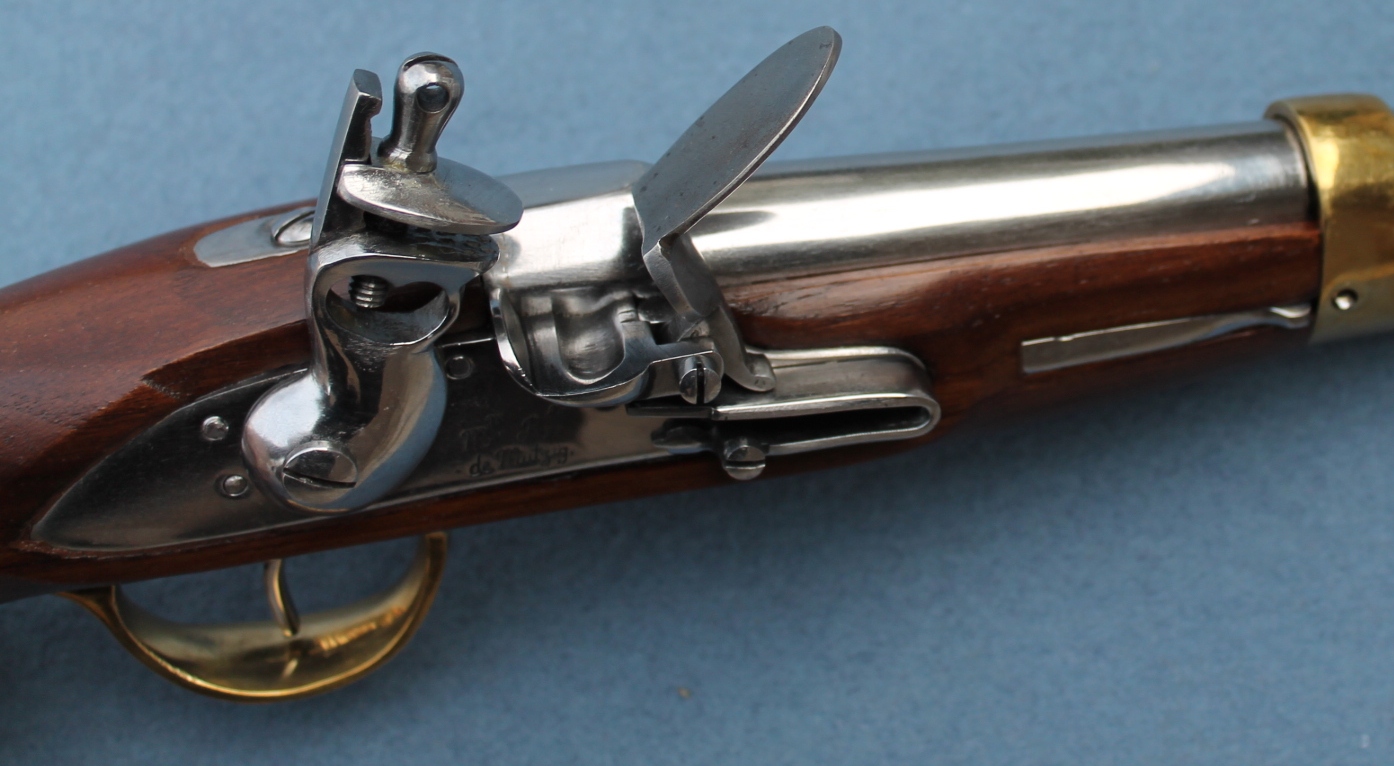
The lock is made with strong durable springs
and has a
case-hardened frizzen (hammer) that throws good sparks.
We
use a industrial case-hardening factory process that makes sparking both more
reliable and longer lasting.
Presently no other musket provider uses
this technique.
As with all our
other flintlocks, the vent is not drilled (read details below) so we can ship easily to our door
throughout North America and to Europe and the UK.
Aside from that they
are exactly like
the originals.
A fine addition to any collection.
The story behind the pattern
History
American Revolution
- French Revolution
In 1763 French
firearms experienced a modernization under the direction of the Duc de
Choiseul
and a new cavalry
pistol was introduced. Three years later the pattern was reduced
in length and the lock was altered slightly. The French royal
armouries put the 1766 model changes into mass production in 1769, including
the armoury at Mutzig. The reproduction above is marked for that
armoury. This pistol would have been part of the pistol
purchases made by Benjamin Franklin in 1777 for Washington's Army.
As well, French cavalry serving in the American Revolution were issued with
them and a number ended up in the French Navy. It is uncertain if the
American navy received any in the War of Independence.
Interestingly enough, this model is similar to the U.S.1811 Model Navy
pistol manufactured by Simeon North before the War of 1812. This
French pistol was often equipped with a steel belt hook, which was
convenient for naval service as well as in pinch while fighting on horse.
However its
greatest use came with the French Revolutionary Wars when Europe was thrown
into almost endless conflict. This brought raise to
Napoleon and his campaigns in Italy (Marengo) and Egypt. While a
new model of cavalry pistol had been introduced in 1777, it proved
unpopular. French revolutionary armouries turned back to the
1766 model. Shortages of brass at some armouries forced them to
mount a steel band and hardware on their pistols opposed to brass.
Still the majority of pistols manufactured remained with brass hardware.
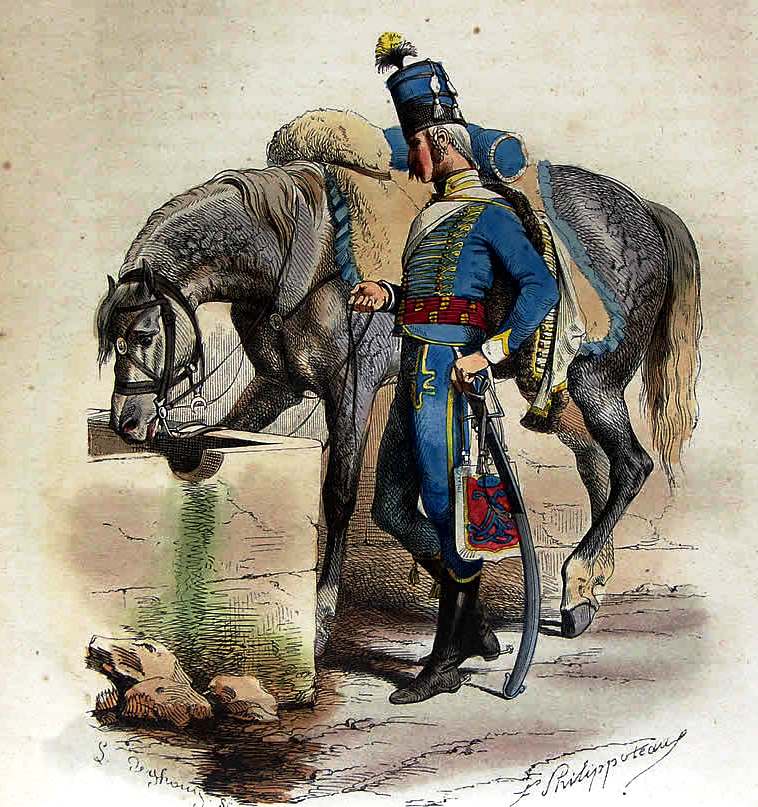
France's Hussards de Lauzun who served at
Yorktown, 1781.
Our Guarantee
If upon receiving your musket you are not completely happy with
your purchase, you may return it for a refund. All we ask is you cover the
shipping costs. It has to be returned in two weeks of receipt and be in its
original state (unaltered and unmodified).
Non-Firing State
We sell historically accurate muskets and pistols in a non-firing state for demonstration purposes. This allows us to comply with various local, state, national and international firearms regulations, along with shipping company policy restrictions. This means the product comes right to your doorstep. A certified gunsmith may decide to alter a musket or pistol to a firing state by drilling the vent hole and test firing it. No need to remove the breech plug. We are not legally responsible for any changes from its present state. Please read our Conditions of Use and Legal Disclaimer. The customer is expected to be aware of the laws of their locality that govern products of this nature.